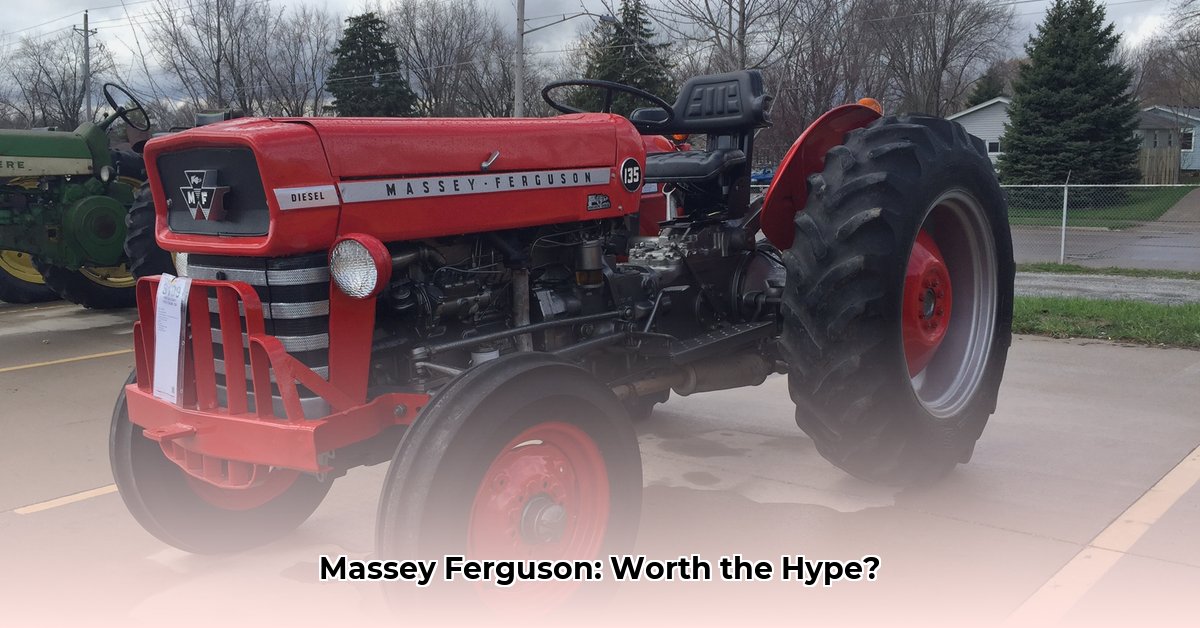
Massey Ferguson: A Balanced Assessment for Sustainable Agriculture
Choosing the right tractor is a pivotal decision for any farmer, impacting both profitability and environmental responsibility. This article assesses Massey Ferguson tractors, examining their suitability for sustainable farming practices across diverse farm scales. We will weigh their advantages and disadvantages, compare them to competitors, and offer actionable advice for informed decision-making. For detailed specifications, check out the Massey Ferguson Specs.
Strengths of Massey Ferguson Tractors
Massey Ferguson tractors are renowned for their durability and reliability. Farmers frequently cite their robust build and long lifespan as key advantages. This longevity translates directly into cost savings by reducing the frequency of equipment replacement, and minimizes the environmental impact associated with manufacturing and disposal. Furthermore, Massey Ferguson offers a broad range of models catering to different farm sizes and operational needs, from compact tractors for smaller plots to high-horsepower models for large-scale operations. This versatility is a significant asset.
Areas for Improvement: Fuel Efficiency and Data Transparency
A crucial aspect of sustainable agriculture is fuel efficiency. Unfortunately, comprehensive and readily available data on Massey Ferguson's fuel consumption rates is limited. More transparent data—such as fuel usage per acre or hectare—is needed for a complete evaluation of their environmental impact. The lack of readily accessible information regarding manufacturing processes and end-of-life management further hinders a comprehensive sustainability assessment. This lack of data is a significant concern. Wouldn't detailed fuel efficiency data be crucial for making truly informed decisions?
Sustainability Considerations: A Lifecycle Perspective
Assessing the environmental impact of a Massey Ferguson tractor requires a lifecycle perspective. While their longevity is beneficial, the manufacturing process, operational fuel consumption, and end-of-life disposal all contribute to their overall environmental footprint. More detailed information from Massey Ferguson regarding their sustainability initiatives throughout the entire lifecycle would greatly aid in a complete environmental impact assessment. The absence of readily available data on these factors currently limits a definitive judgment on their overall sustainability.
Competitive Landscape: Massey Ferguson vs. John Deere and New Holland
Massey Ferguson often presents a competitive price point compared to brands like John Deere and New Holland. However, some competitors offer more detailed fuel economy data and advanced technological features, such as integrated precision agriculture systems. While Massey Ferguson tractors are praised for their sturdy construction, these technological advancements frequently contribute to greater resource efficiency and reduced environmental impact. This aspect warrants careful consideration when comparing options. How do these technological advantages affect overall sustainability?
Actionable Advice for Farmers
The optimal Massey Ferguson tractor depends significantly on individual farm needs and scale.
For Small-Scale Farmers:
- Budget-Conscious Selection: Models like the GC1700, 1500, or 1700 series often represent cost-effective choices for smaller operations.
- Prioritize Preventative Maintenance: Regular maintenance is crucial for maximizing tractor lifespan and minimizing operational costs over time.
- Strategic Upgrading: Consider financing options to facilitate necessary upgrades or potential replacements as farm needs evolve.
For Large-Scale Farmers:
- High-Horsepower Models: Models like the 7700 and 8700 series might be suitable, but independent verification of fuel consumption from multiple reliable sources is essential.
- Precision Agriculture Integration: Investing in precision agriculture technologies can optimize resource use and reduce environmental impact, leading to a significant return on investment.
- Fuel Efficiency Enhancements: Explore add-ons or modifications that may improve fuel economy further.
Conclusion: A Call for Transparency and Further Research
Massey Ferguson tractors offer a compelling combination of affordability and proven durability. Their long lifespan is undeniably advantageous for sustainable farming practices. However, the current limitations in readily accessible data regarding fuel efficiency and complete lifecycle environmental impact hinder a fully comprehensive assessment. Consumers who prioritize longevity and robust build quality might find Massey Ferguson tractors ideal. But those prioritizing fuel efficiency and cutting-edge technology should conduct thorough research across various brands. Ultimately, the optimal choice hinges on individual farm needs, budgetary constraints, and specific sustainability priorities. Greater transparency from manufacturers and further research are crucial for fostering truly informed decision-making.